| |
|
| |
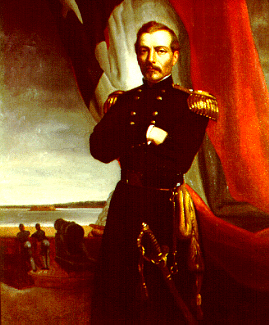
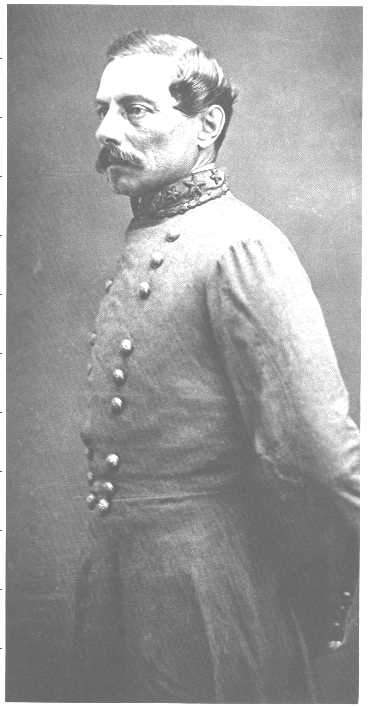
Pierre
Gustave
Toutant-Beauregard
(May 28, 1818 - February 20, 1893)
|
 |
|
|
European
French Creole |
| |
Pierre
Gustave Toutant-Beauregard
born in New Orleans - May 28, 1818
died in New Orleans - February 20, 1893 |
Shortened
his name to G.T. Beauregard while a student at West Point. Graduated
2nd in his class from West Point - 1838
Twice promoted (to Captain and Major) for gallantry in the Mexican
War. Appointed Superintending Engineer of the New Orleans Customs
House, a position he held for 10 years. At the time, this was
the largest building ever constructed in North America.
The services of "The Hero of Fort Sumter," Pierre
G.T. Beauregard, were not utilized to their fullest due to bad
blood between the Confederate general and Jefferson Davis. The
native Louisianan had graduated second in the 1838 class at
West Point. There he had become a great admirer of Napoleon
and was nicknamed "The Little Napoleon." Posted to
the artillery, he was transferred to the engineers a week later.
 |
As a staff
officer with Winfield Scott in Mexico he won two brevets and
was wounded at both Churubusco and Chapultepec. In the interwar
years he was engaged in clearing the Mississippi River of obstructions.
In 1861 he served the shortest term ever-January 23-28 as superintendent
at West Point. Southern leanings probably resulted in his prompt
removal. On February 20, 1861, he resigned his captaincy in
the engineers and offered his services to the South.
His Confederate assignments included: brigadier general, CSA
(March 1, 1861);
 |
Placed in charge
of the South Carolina troops in Charleston Harbor, he won
the nearly bloodless victory at Fort Sumter. "The Little
Creole" was hailed throughout the South. Ordered to Virginia,
he commanded the forces opposite Washington and created the
Confederate Army of the Potomac.
Utilizing Napoleonic
style, he drafted the attack orders for Shiloh and took command
when Johnston was mortally wounded on the first day of the
battle. On the evening of the first day he let victory slip
through his fingers by calling off the attacks. Controversy
over his decision has raged to this day.
Ordered
north, he took command in North Carolina and southern
Virginia while Lee faced Grant in northern Virginia.
Gradually the two forces were pushed together in an
awkward command arrangement.
Beauregard managed to bottle up Benjamin F. Butler
in the Bermuda Hundred lines after defeating him at
Drewry's Bluff. This was Beauregard's finest performance
of the war.
|

|
In the final
days of the war he was again second in command to Joseph E.
Johnston, this time in North Carolina. Following the capitulation
he returned to New Orleans and refused high rank in the Egyptian
and Rumanian armies. Engaged in railroading, his reputation
was tarnished by his association with the Louisiana Lottery
as a supervisor.

|
|
 |
 |
|