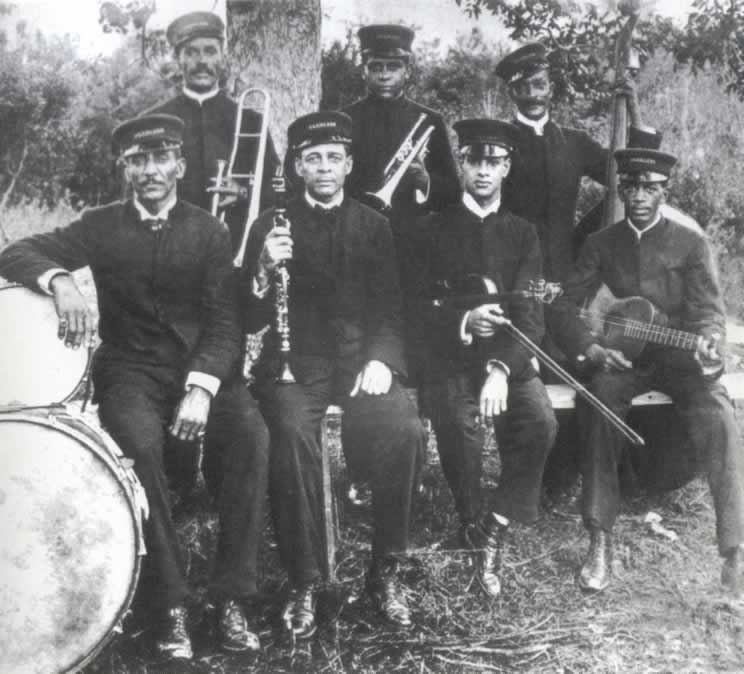
The origins of ragtime are just as
difficult to determine as the origins of blues. Both ere created
by African Americans on a folk level, and thus went undocumented
in their early stages. An early form of ragtime is believed
to have flourished in barrooms, dance halls, and at various
gatherings of black people two decades or more before the
first rag was published.
Originally, the rags were the exclusive
property of African Americans but the first published rag
(“Mississippi Rag,” 1897) was by a white Chicago
band leader, William Krell. Later in the year 1897 the first
rag by a black Composer, Tom Turpin’s “Harlem
Rag,” was published in St. Louis.
The Missouri towns of Sedalia and
St. Louis became centers of the new music. Sedalia’s
Maple Leaf Club and the sporting houses and beer gardens along
St. Louis’ Chestnut and market Street employed many
of the early ragtime pianists. The Louisiana Purchase Exposition
(1904), better known as the St. Louis World’s Fair,
helped popularize ragtime.
The rag moved from the parlor in
the red light districts to the parlor in the average man’s
home. Another factor in the spread of the new musical craze
was the piano roll. At one time rolls were being reproduced
at six time the rate of human beings in the United States.
This might have been termed the “piano roll explosion.”
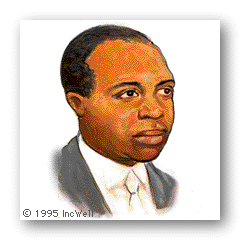
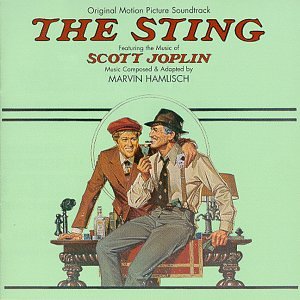
Scott Joplin (1868-1917), whose “Original
Rags” and “Maple Leaf Rag” were published
in 1899, soon became recognized as the “King of Ragtime.”
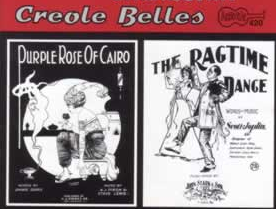
His publisher, john Stark of St. Louis, produced a long series
of hits which have remained the classics of ragtime to this
day.
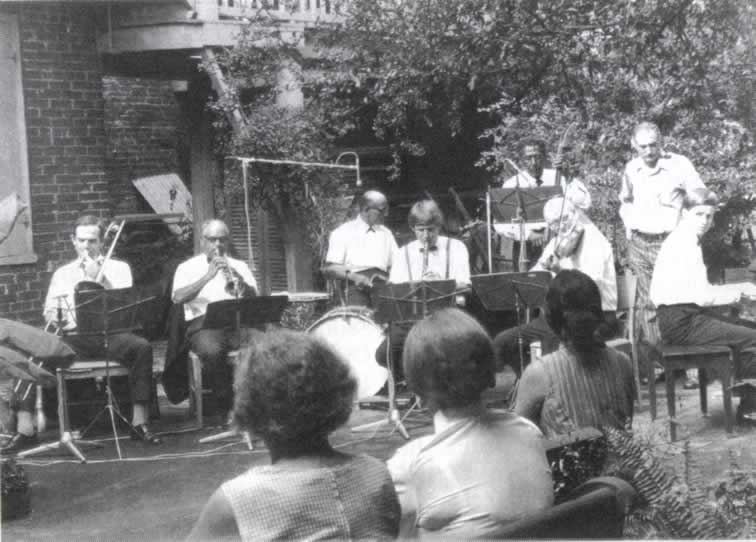
Not only was ragtime the most popular
piano music of the first two decades of this century but all
dance and theatre orchestras as well as brass bands added
the latest rags to their repertoire.
By the end of World War I, with the
growing popularity of jazz, ragtime was on the wane. As John
Stark wrote in 1919, “the spirit of high class rags
by the masters of all time, the marvel of musicians in all
civilized countries, was diluted, polluted and filtered through
thousands of cheap songs and vain imitations which have done
much harm to the reputation of real classics ragtime.”
When the twenties came there were still a few rags being written
but the demand for ragtime had almost vanished. However, the
influence of ragtime on America’s music since that time
has been very notable especially in the realm of folk music,
such as blues and white country music.